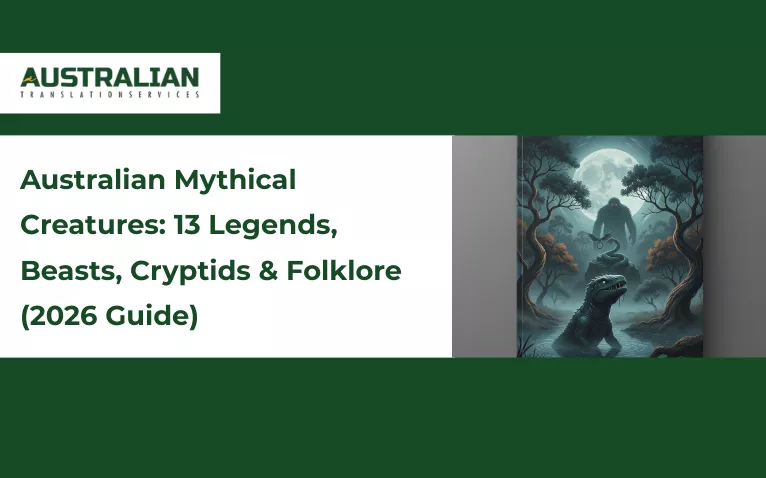
Australian mythical creatures are a part of this beautiful country. Australian myths and legends inspire curiosity about the world’s wonders. They include stories of sea creatures and mysterious landscapes, to the vast Australian bush. These stories continue to shape cultural imagination and fascination.
It is no surprise that Australia is home to a variety of unusual and mythological species. After all, it possesses one of the most distinctive settings and ecosystems on the whole planet.
Australian folklore includes many reports of cryptids. These are native animals believed to exist despite scientific disagreement. Stories mention creatures similar to the Loch Ness monster or the Himalayan yeti. Other legends include the Rainbow Serpent, the Gippsland phantom cat, poisonous snakes, and monster turtle fish.
As per the folklore, legendary creatures inhabit the Australian outback and often roam near major cities. The Bunyip is the most well-known among them. Lesser-known creatures include the Yowie, the Drop Bear, and the Hoop Snake.
Explore these thirteen mysterious Australian monster legends. These stories have fascinated and frightened the nation for decades.
Top 13 Most Intriguing Australian Mythical Creatures
The Creators formed the cosmos and humankind in a period before time. During this era, they also established clear guidelines. These rules explained how people should interact with one another. They also defined how people should treat their surroundings.
To explore whether these stories are genuine, consider these examples of Australian Mythical Creatures. Here are thirteen of the most intriguing Australian urban legend animals.
1. The Legendary Bunyip – Mythical Monster of Australian Lore
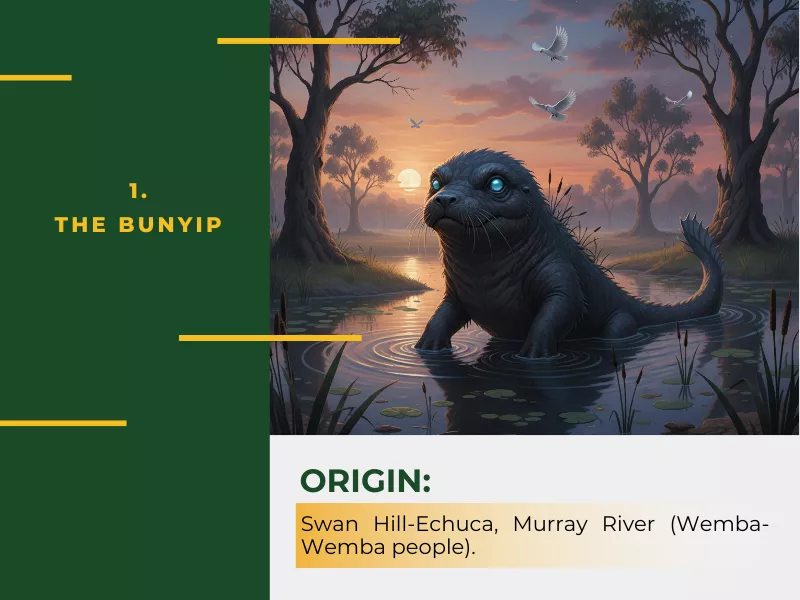
The Bunyip is an ancient Aboriginal spirit haunting Australia’s wetlands. While its form varies across centuries of lore, it remains a definitive icon of national folklore.
Origin: Named by the Wemba-Wemba people (Swan Hill-Echuca), the Australian translation of the name is ‘evil spirit. In Dreamtime lore, these creatures hide in billabongs or the Murray River by day and hunt at night.
Appearance: Descriptions often depict a furred dog-seal hybrid with large ears and tusks. An expert swimmer, it is recognised by its terrifying, low-pitched bellows that echo across Outback waters.
Sighting Stories:
- 1818: Explorers Hume and Meehan recorded a “Bunyip” carcass at Lake Bathurst.
- 1800s: British settlers documented numerous sightings in inland riverbeds.
- 1930s: Reported sightings peaked during the Great Depression.
Scientific Explanations: Experts link the myth to the Diprotodon, a giant extinct wombat. They also connect it to the booming calls of the Bittern bird. Early settlers often misidentified native wildlife in the dark. Animals such as kangaroos caused confusion. These repeated mistakes likely fueled the legend over time.
Pop Culture & Depictions: View the mechanical sculpture at Sturt Reserve. You can also visit local landmarks in Mulgildie, Aireys Inlet, Tooradin, and Bundoora Park.
2. The Hawkesbury River Monster – New South Wales’s Prehistoric Water Serpent
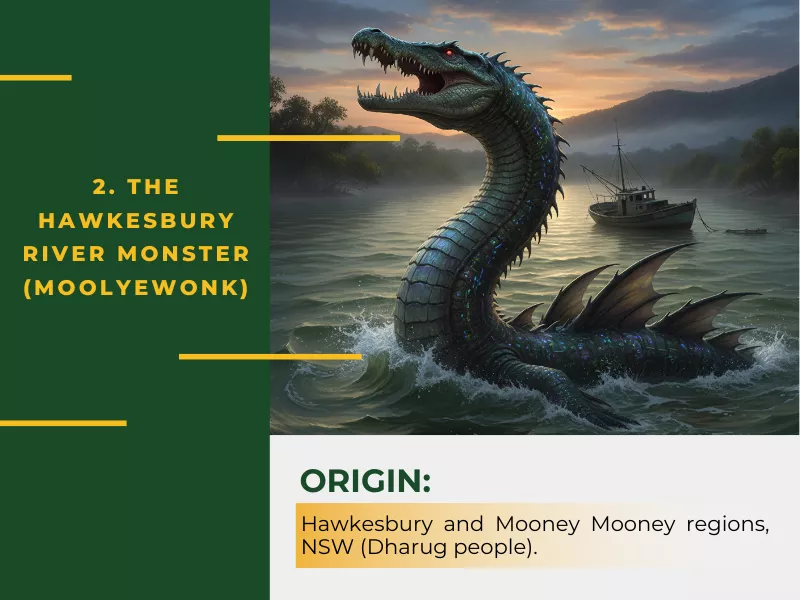
Origin: The Dharug people know this being as Moolyewonk. It appears in rock art dating back over 3,000 years. These carvings lie northwest of Sydney. The earliest records are those of the Hawkesbury and Mooney Mooney regions. They portray a mythical serpent in water associated with religious faith.
Appearance: Witness accounts describe a shy, 24-meter grey creature. It possesses the body of an eel and the plesiosaur characteristics. Such characteristic features are four flippers and an elongated neck. Observers consider it non-hostile. The creature often watches humans before silently submerging underwater.
Sighting Stories:
- 1800s: There were many entries in European record books about a sea serpent or the Mooney Mooney Monster.
- Modern Day: Sightings continue, with search parties tracking “dinosaur-like” heads breaching the river surface.
Scientific Explanations: Researchers attribute sightings to misidentified giant eels, catfish, or stray crocodiles. The profile of a swimming goanna with the head and neck raised up is very similar to a prehistoric plesiosaur. Such natural experiences must have transformed into myths of Jurassic survivor over the millennia.
Pop Culture & Depictions: Moolyewonk remains a major icon in Australian monster culture. Aboriginal rock art is available in Dharug National Park for visitors. There are others who go on exploring prehistoric displays in the Australian Museum. Such depictions are a close reflection of the descriptions of the legend.
3. The Yowie – Australia’s Hominid Equivalent to Bigfoot
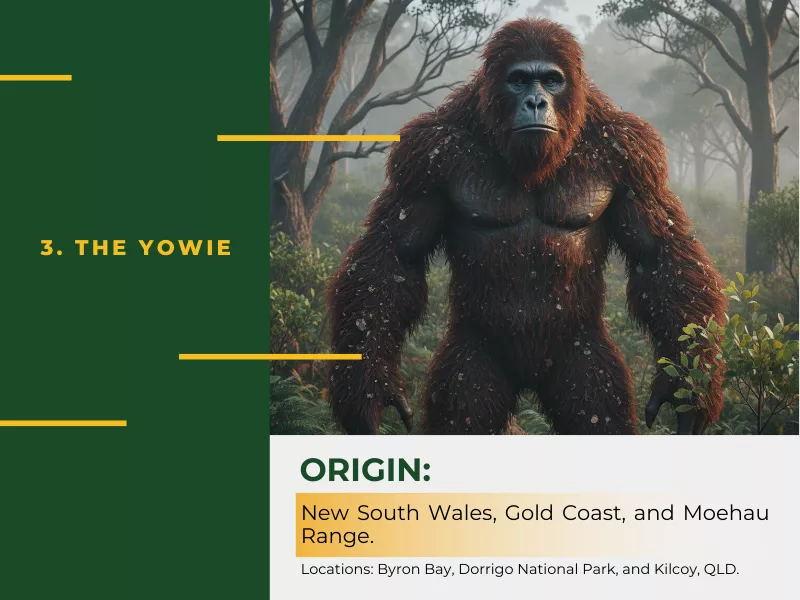
The Yowie is an Australian version of a bipedal hominid. It is similar to the Bigfoot in North America and the Himalayan Yeti. A similar creature is the Yeren that is present in China. This is an Australian urban legend that lives in isolated mountain areas. Indigenous Ape is what people refer to it as.
Origin: Aboriginal mythology spoke of the Yowie prior to the introduction of Europeans. The communities called it Yahoo, Hairyman, or Pangkarlangu.
Appearance: The witnesses report about the creature that is more than six feet high. It is a muscular and gorilla-human hybrid. Its body and huge paws have thick hair covering. The facial appearance features a flat nose. Its behaviour is between aloof and shy. There are encounters of a territorial and aggressive response.
Yowie Sightings Stories: Written accounts began appearing during the 1700s. In the 1850s, the number of reports grew sharply. Sightings occurred across New South Wales and the Gold Coast, as well as the Moehau Range. Yowie hunters still monitor the Byron Bay to the forests of the Great Barrier Reef.
Scientific Explanations: Scientists classify the Yowie as folklore rather than a biological species. Sceptics suggest sightings are cases of mistaken identity with bipedal kangaroos. Formal scientific recognition remains absent.
Pop Culture & Representation: Yowie is a source of inspiration for local films and confectionery. Visit the famous Kilcoy Yowie Statue in Queensland or join specialised tours in Dorrigo National Park.
4. The Drop Bear – Australia’s Notorious Arboreal Prank
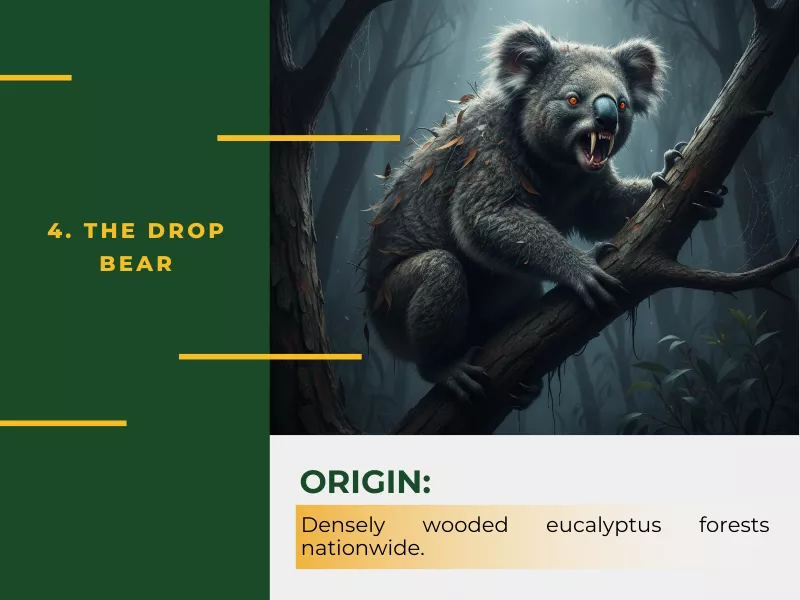
The Drop Bear is a hunter, a carnivorous offshoot of the koala. According to the myth, it attacks unsuspecting travellers, leaping off the tops of eucalyptus trees. It is the most popular urban legend in Australia and a prank.
Origin: This modern folklore has a pseudoscientifical name, Thylarctos plummetus- a name that NAATI certified translators and linguistic historians often study to preserve Indigenous oral histories.
It has spread over more than a century. It is more of a local Australian leg-pulling prank to scare foreigners.
Appearance: Physical appearance: It looks like a giant and muscular koala. Its forearms are strong, and its teeth are sharp. It uses them to latch onto necks below.
Interesting Facts:
- Similar to “Hoop Snake” myths, children are warned of aggressive marsupials to instill wilderness caution.
- Tales frequently describe ambush “plunges” occurring in densely wooded parks across Australia.
- To go with the national joke, the Australian Museum maintains a parody entry.
Scientific Explanations: Despite modern hoaxes, the myth may trace back. It links to Thylacoleo carnifex, the Marsupial Lion. This real prehistoric predator lived four million years ago. It was a powerful arboreal carnivore in ancient Australia.
Pop Culture: The Drop Bear is a staple of Australian hhumourand tourist “hazing.” Read the “official” satirical research at the Australian Museum for amusement.
5. The Yara-ma-yha-who – Australia’s Outback Vampire
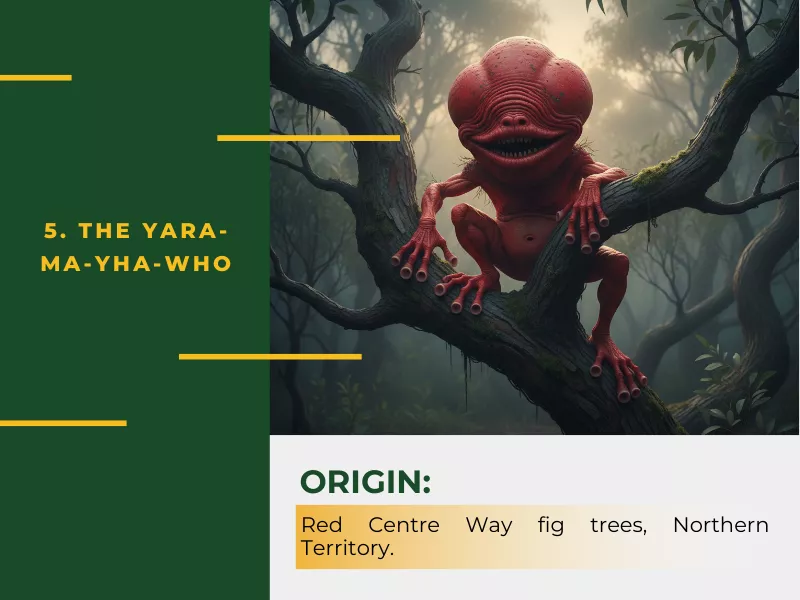
This is a daytime predator dwelling in the canopies of the trees and attacks unsuspecting travellers. This is a horrifying character in Dreamtime, who is a goblin and a vampire. It falls off the leafy thickets to trap people who want to be in the shade.
Origin: Rooted in Aboriginal mythology, this red mini-monster lives. It lives in figs in the Australian bush. It is particularly visible along the Red Centre Way.
Appearance: A frog-like monkey-man of red colour. No teeth, has an oversized head. Uses specialized suckers on its fingers and toes to consume prey. For reference, explore traditional Dreamtime iconography. Also, local Aboriginal art centres in the Northern Territory.
Behaviour:
- Then the creature sleeps after feeding. It then throws the victim outside alive.
Scientific Explanations: Cryptid investigators liken its descriptions to the Southeast Asian tarsier primate. Never, however, has any such species occurred in the Australian Outback.
Australian Cultural Significance: This myth still continues to exist as a strong metaphor of environmental vigilance. It is historically a warning, Bush Urban Legend,d to those who stroll alone.
6. The Muldjewangk – Legend of the Murray River
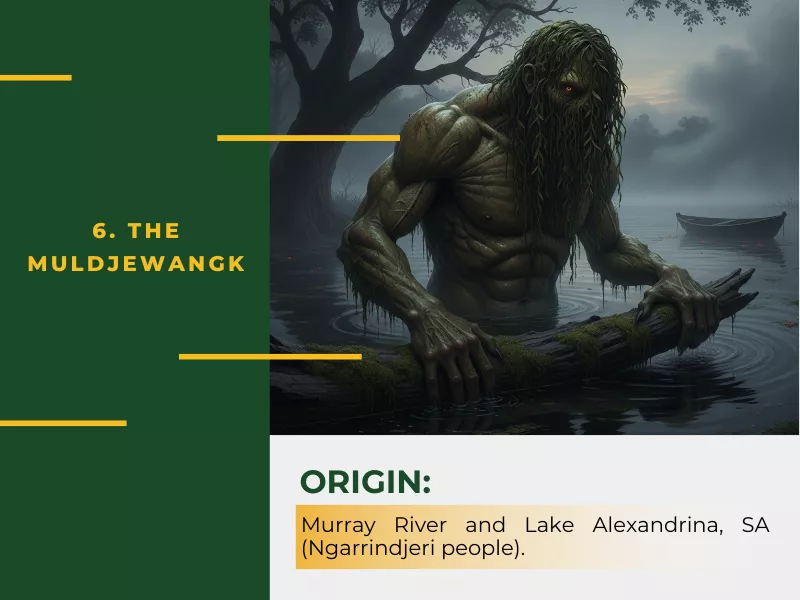
The Muldjewangk is a Ngarrindjeri water spirit. It inhabits the Murray River and the lake Alexandrina in Australia.
Origin: Native Australian elders utilised this story of water ogres. They informed children about the dangers of deep water close to rivers.
Appearance: According to the Aboriginal Australian mythology, it is a hybrid being. It possesses human characteristics of fish and seaweed-like hair. It hides behind floating vegetation to ambush intruders.
Traits: The muldjewangk destroys fishing lines without warning, often. It upsets anyone foolish enough to visit there. Take care around the lake’s developing seaweed areas. The Muldjewangk hide within this thick growth often.
Debunking Myth: Researchers suggest sightings involve giant Murray Cod fish. Some attribute it to floating logs stuck in whirlpools around.
Where to See? View Ngarrindjeri artefacts and lore at the Australian Museum.
7. The Kinie Ger – Australia’s Predatory Quoll-Man
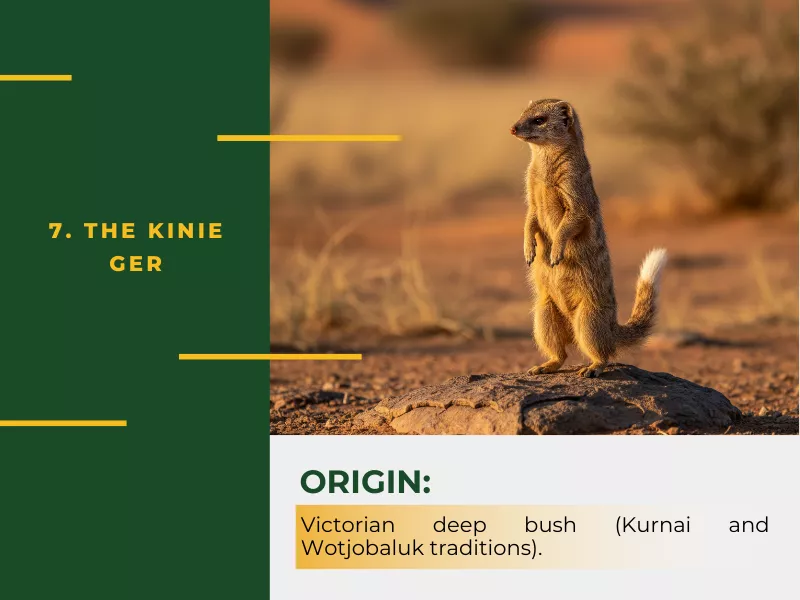
This is a man-eating hybrid of the Victorian Aboriginals. It is a mixture of human wit and the ferocity of a quoll. It is still a remorseless deep-bush character in the 13 most popular Australian mythical creatures.
Origin: Rooted in Kurnai and Wotjobaluk traditions, deeply held. This villainous spirit defied ancient laws knowingly still. It hunted humans against sacred rules there, then.
Appearance: It has a human-shaped body in general. It possesses a quoll head and spotted hair. It demonstrates the fangs of an Eastern Quoll. It is nimble and swift, and goes through the bush. It preys on using clubs or spears. It is hardly ever noticeable by unsuspecting prey.
The Legend: The legend of Dreamtime tells about how the monster killed many tribes. Then, at last, the Great Owl overcame it.
Sightings: Victorian settlers recorded mysterious bipedal shadows that often appeared there. These appeared in dense forests across regions nearby. These reports mirrored much older ancient accounts closely.
Sceptic Views: The myth may describe extinct megafauna creatures once. One example includes the giant monitor lizard Megalania. Oral history reshaped it as a man-beast figure. These stories warned hunters across many generations.
Cultural Reference: The Kinie Ger is a sign of danger, arrogance, and violence. People can discover Indigenous storytelling at Bunjilaka Cultural Centre.
8. The Burrunjor – The Outback’s “Living Dinosaur.”
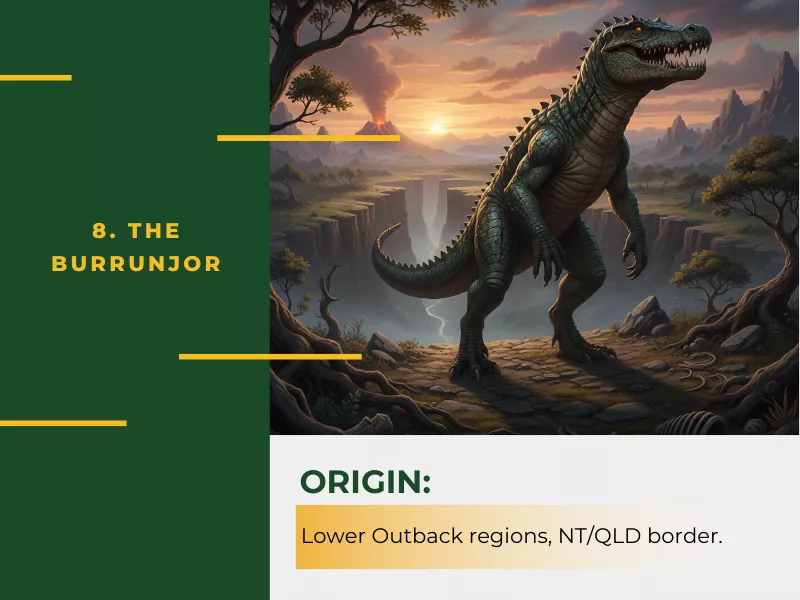
The Burrunjor is one of the fear-inspiring legends in Australia. Strangers refer to it as a giant prehistoric predator. It moves upright like a T. rex.
Origin: Indigenous peoples called it Old Three Toes long ago. The creature roamed the lower Outback regions. The legend highlights a fascinating contrast often studied in Western vs Eastern Culture. European settlers feared monsters in unknown lands. Aboriginal lore framed beings as spiritual guardians instead.
Legends describe a bipedal reptile of great size. It measured between 20 and 25 feet. Small clawed hands contrasted with powerful hind legs. The animal displayed a ferocious hunger. It fed on the livestock of settlers. It also hunted native kangaroos. It left great footprints behind it.
Sighting Stories:
- 1950s–1980s: Many stockmen reported sightings of the dinosaur-like creature. Also, reported mysterious livestock disappearances.
- Last 40 Years: Accounts stopped. This absence sparked debates about possible extinction.
Scientific Explanations: Investigators suggest sightings involved misidentified Perentie lizards. These lizards extend up to three meters. Some associate the legend with fossil footprints. Others instead point to the cultural recollections of Megalania.
Pop Culture & Depictions: Nowadays, explorers are able to traverse its purported land. They frequently ride on The Ghan railroad. Others visit fossil records in Darwin museums.
9. The Papinijuwaris – The Celestial Cannibals
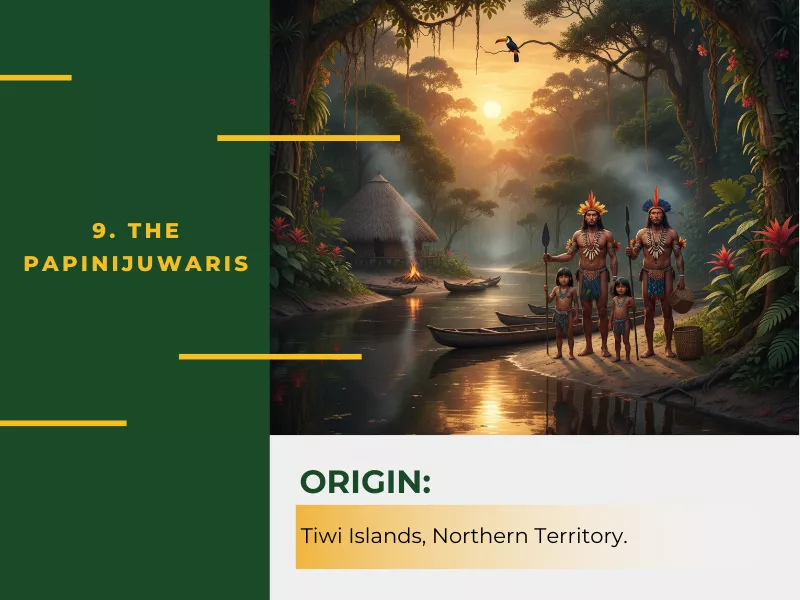
The Papinijuwari is a dreadful giant ghost. People dread it because it stalks weak people. It feeds on the deceased.
Origin: Tiwi lore describes them as soul harvesters. They prey on the sick and weak. Tales have it that shooting stars show their motion. They run through the skies with fire sticks.
Appearance: Stories describe massive humanoid giants at night. They drink the blood of the sick. They even consume the meat of the dead. Fire sticks assist them in hunting approaching souls.
Stories: Tiwi oral history warns of unseen presence. A nearby Papinijuwari signals danger. It manifests itself near burial sites or sickbeds. Such signs predict spirit consumption soon.
Scientific Explanations: Historians believe legends explained disease outbreaks. They also explained meteor showers spiritually. These ideas existed before modern science.
Demonstrations: The visitors may see Tiwi carvings and paintings. They are present at the Museum and Art Gallery. The gallery is located in the Northern Territory.
10. The Hoop Snake – The Outback’s Rolling Menace
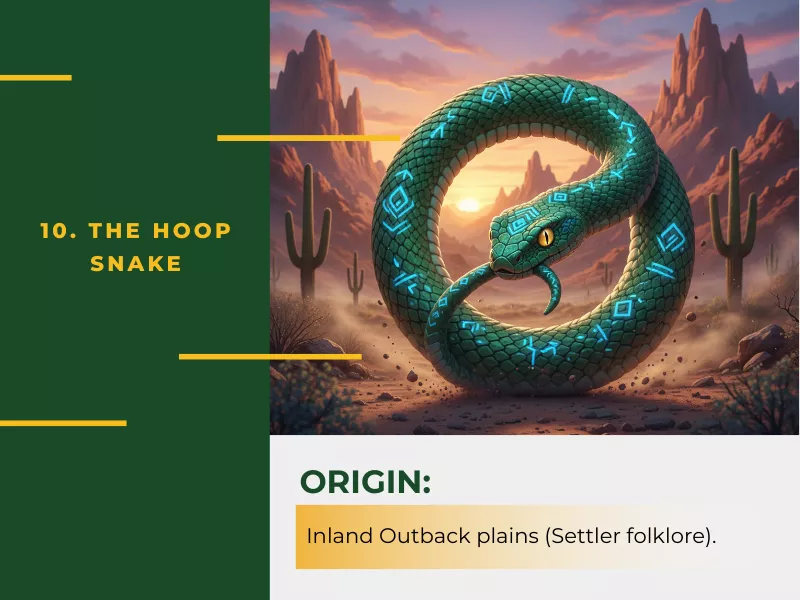
The Hoop Snake is a legend that races along. It was famous due to its rolling movement. Individuals talk of the violent chasing after targets.
Origin: European settlers spread the tale widely. They exchanged it as a country amusement. Narratives tended to terrify travellers.
Appearance: The snake is approximately four feet long. It uses its jaws to get hold of its tail. This makes up a stiff rolling circle. It travels at speeds of almost 37 mph. It folds violently when it attains targets. It strikes like a discharged arrow.
Sighting Stories: Nineteenth-century pioneers reported many encounters. They claimed serpents chased them relentlessly. These stories spread across dusty plains.
Scientific Explanations: Sceptics reject the creature as being entirely a myth. They cite snake anatomy limitations clearly. Sidewinding snakes caused misidentifications instead.
Pop Culture: Many visitors now explore reptile sanctuaries. They learn to separate fact from folklore.
11. The Dirawong – The Protector of the Richmond River
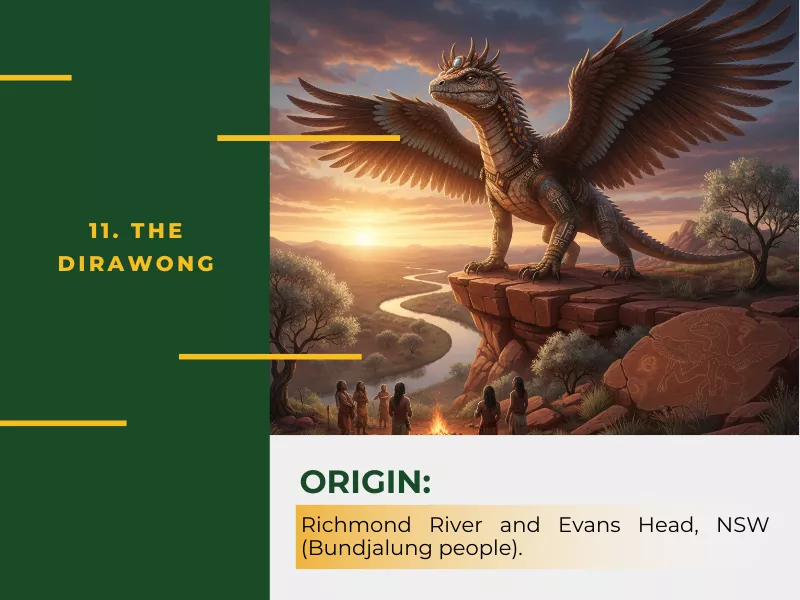
The Dirawong is an enormous goanna spirit among all Australian mythical creatures. It comes from Bundjalung lore. People celebrate it as a protective figure. It shaped landscapes through ancient battles.
Origin: Bundjalung people view Dirawong centrally. It represents wisdom and protection. It competes with the Rainbow Serpent.
Appearance: Stories describe a colossal lizard form. It was between seven and ten meters. It was very similar to the Megalania Prisca of the prehistoric era.
Legendary Battle: Legend narrates about a wild old battle. This battle cut the Richmond River. It created the Snake and Pelican Islands. Displaced earth formed these landmarks.
Scientific Explanations: Paleontologists suggest the Dirawong is an oral record of the Megalania, a giant monitor lizard that went extinct 40,000 years ago.
Significance: Tourists get to visit these ancestral lands. Evans Head is home to Dirawong Reserve. It archives Aboriginal folklore.
12. The Tiddalik – The Greedy Frog of the Flood
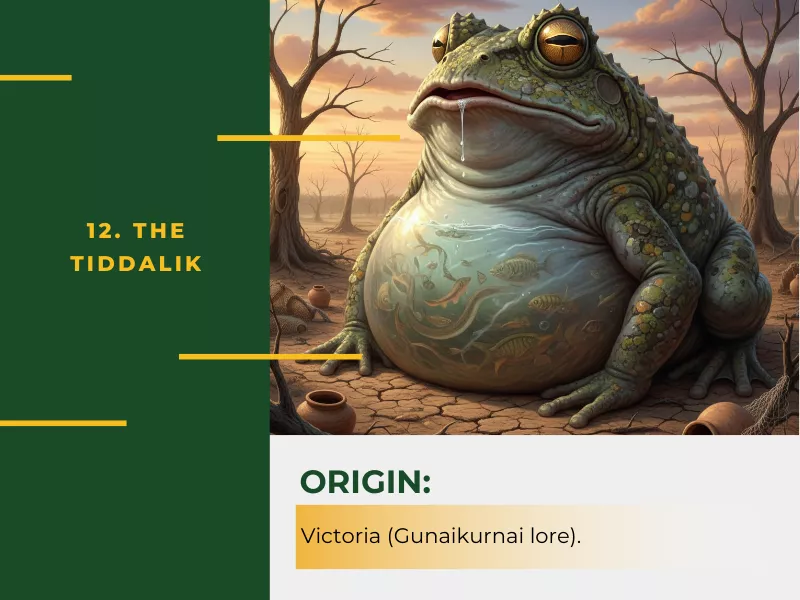
Tiddalik is a moralistic warning story. It cautions against corruption and greed. The story focuses on water management.
Origin: Rooted in Gunaikurnai lore and various other Indigenous traditions, Tiddalik is a fundamental part of Australian folklore.
Appearance: The frog looks monstrously inflated. It holds rivers and lakes within it. Its belly contradicts the logic of nature.
The Legend: Legends tell that Tiddalik drank all the water. The soil dried out and became infertile. Animals fooled him in other ways. They made him laugh sooner or later. Water sprang out in the scenery once more.
Scientific Explanations: There are two ways in which scientists associate the myth with actual frogs. Certain species retain water within themselves. This adaptation is what accounts for survival in droughts.
Significance: Tiddalik remains a significant figure in children’s literature and public sculptures.
13. The Rainbow Serpent – The Creator of the Dreamtime
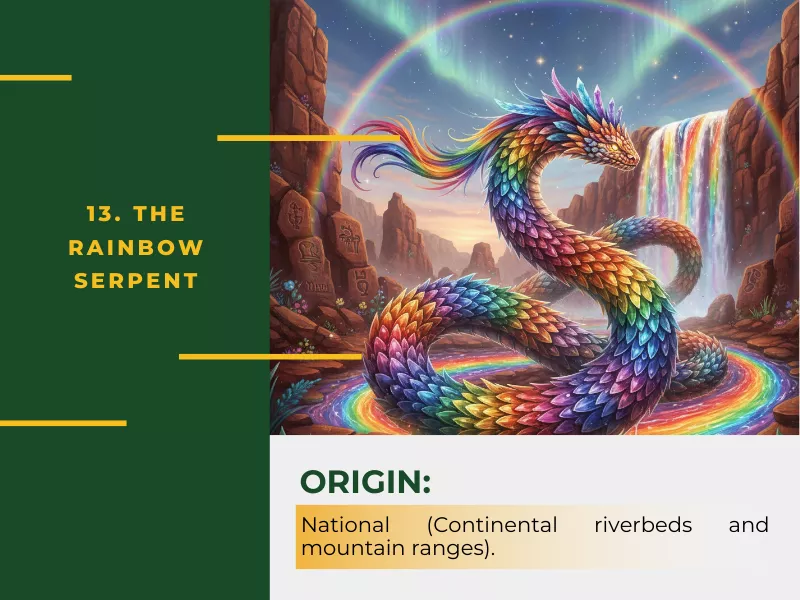
The Rainbow Serpent stands as the supreme creator. It ranks among the world’s oldest deities. It represents fertility and rainfall. It also enforces ancient sacred laws.
Appearance: People describe a colossal, winding snake. Its scales shimmer with many colours. These colours bridge the earth and sky realms.
The Legend: During the Dreamtime, it travelled widely. Its heavy body carved riverbeds. Movements raised mountain ranges dramatically.
Scientific Explanations: Palaeontologists link the legend to Wonambi. This prehistoric python grew extremely large. Such creatures inspired oral traditions, likely.
Significance: The Rainbow Serpent remains spiritually central. It appears widely in national art. Indigenous culture preserves its meaning today.
What Is Australian Mythology about the Creatures?
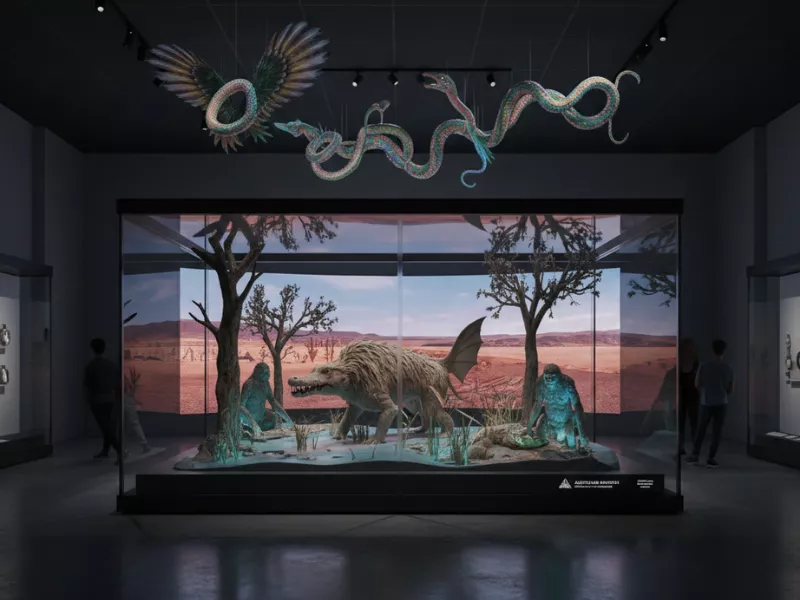
The Dreamtime, or Dreaming, describes Aboriginal mythical beings. These beings take new forms known as totems. Totems continue to represent their spiritual presence. Cultural contact often changes how people interpret these beliefs.
Ancient stories survive across generations. They often blend with new ideas over time. Immigrants sometimes adopt regional beliefs. Totemism allows people to connect with distant ancestors. They achieve this by empathising with symbolic objects.
Aboriginal people identify with specific Australian mythical creatures or locations. These represent the totems of creator beings. Such places and objects hold ongoing spiritual meaning. They remain central to rituals across Aboriginal Australia.
About Australian Aboriginal Mythology And Aboriginal Peoples
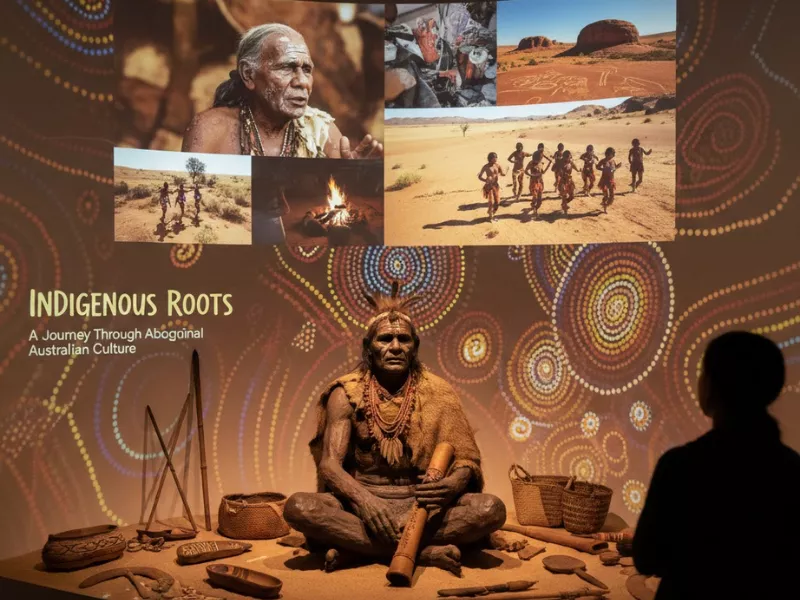
Aboriginal peoples were the first inhabitants of the Australian continent. They created the tales and customs that form Australia’s mythology. Aboriginal communities developed creation myths and folklore. These stories describe many unusual and magical animals.
Some stories were shared only with men. Others were told only to women. Elders passed these legends through oral storytelling and ceremony. They kept certain myths exclusive to specific groups.
More Australian Mythical Creatures To Watch Out For
Only a few legendary mythical Australian creatures are as well-known as those mentioned above. You may undoubtedly hear Australians caution you to be on the lookout for a few mythological animals like the Tasmanian tiger from Australian tall story heritage. Readers thinking about visiting Australia should be forewarned before we go on.
Blue Mountain Panther
A panther is the last animal you would expect to encounter in the Australian wilderness, but one reportedly prowls the Blue Mountains area. According to legend, the panther either escaped from a circus or is descended from American soldiers who were freed with the giant cat in Australia during World War II.
Malingee
The Australian Aboriginal people know the terrifying, nocturnal Malingee as something to stay away from. These isolated beings tend to avoid interacting with people. However, if this species is provoked, things may go ugly quickly.
Frequently Asked Questions
Does Australia Have Gods?
The Wonnarua, Kamilaroi, Guringay, Eora, Darkinjung, and Wiradjuri peoples were among the Aboriginal Australian groups that referred to Baiame as the creator deity and sky father in their Dreaming.
What Is The Aboriginal Word For Demon?
Aboriginal Australians nowadays typically interpret the word bunyip as “demon” or “bad spirit.”
What Is The Most Feared Mythical Creature?
Hydra. The Hydra is one of the most strange and mythical creatures from antiquity. Early mythology saw the emergence of sea monsters when man entered the waters and widened their boundaries. But the Hydra is still arguably the most famous sea monster from early mythology.
What Is An Australian Bunyip?
Bunyip. Australia’s rivers, lakes, and swamps once existed a man-eating monster known as the bunyip. People were frightened to enter the lake as its scream reverberated through the night air. The bunyip prowled the countryside at night, looking for women and children to devour.
What Is the Australian Supernatural Creature?
Australia possesses several, notably the Bunyip and the Rainbow Serpent. These beings stem from Aboriginal Dreamtime mythology. They represent powerful spirits that guard the continent’s inland waters and sacred sites.
What Is the Most Famous Australian Cryptid?
The Bunyip remains the most iconic Australian cryptid. This legendary water monster haunts billabongs and swamps. On the other hand, the bipedal Yowie serves as the country’s world-renowned version of Bigfoot.
You May Also Be Interested to Know
1. Australia Travel Advice For A Perfect Holiday To The Land Down Under
2. The Best Place To Live In Australia: There is Something for Everyone!

Want To See My Profile — Click Here Emily Chen
- Australian Mythical Creatures: 13 Legends, Beasts, Cryptids & Folklore - January 30, 2026
- Cultural Diversity In Australia – An Ethnolinguistic Symphony - December 27, 2025
- Australian Kriol Languages: History, Culture, and Modern Revival - November 25, 2025