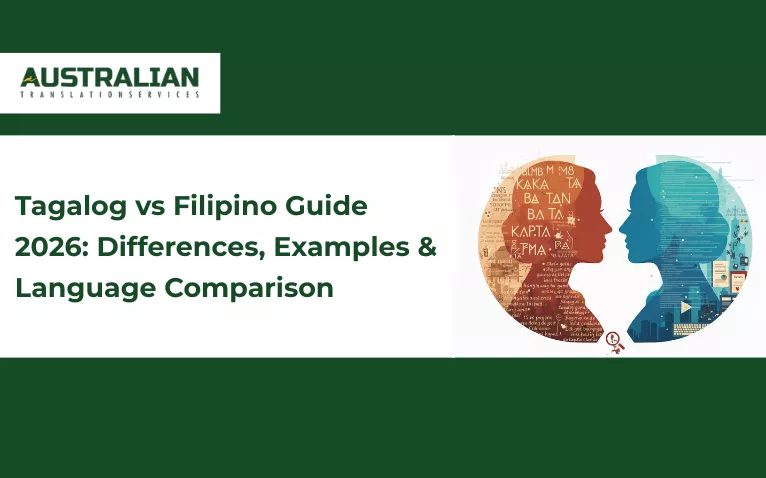
Tagalog vs Filipino Guide 2026: Differences, Examples & Language Comparison
Here’s a surprising fact: Tagalog vs Filipino are not the same language, even though 50 million people use these terms interchangeably every day. One has 20 letters, the other has 28. One is over 1,000 years old, the other just 50. So which one should you learn? Which one is “real”?
This guide cuts through the confusion with real examples, debunked myths, and the fascinating story of how one language evolved into another, yet both still exist today.
Brief History of Tagalog
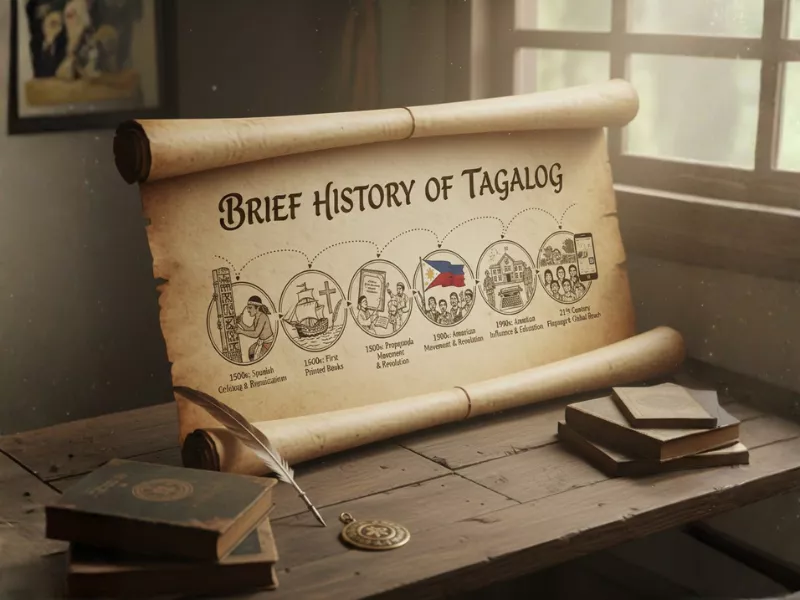
Despite its origins in the Philippines, Tagalog ranks among the world’s most widely spoken languages. Originally, Tagalog was primarily spoken in Metro Manila and neighbouring provinces. Today, more than 50 million Filipinos speak Tagalog domestically, with an additional 24 million speakers internationally.
The term “Tagalog” literally translates to “from the river,” and its origins trace back over 1,000 years. Throughout its history, Tagalog has evolved significantly as various nations influenced the Philippines through colonisation and trade.
Interestingly, Tagalog incorporates elements from numerous languages, including English, Spanish, Sanskrit, and Arabic. In 1879, Tagalog was designated as an official language of the Philippine Islands, marking an important milestone in its development. Several translation service providers present translation services to help you reach Tagalog-speaking audiences effectively.
Brief History of Filipino

When the Philippine Commonwealth Constitution was adopted in the 1970s, the government recognised the need for a standardised national language. This led to the creation of Pilipino, which was later renamed Filipino in the mid-1980s.
Filipino Language was constructed using Tagalog as its foundation while incorporating new terms from other languages such as Spanish, Sanskrit, English, and Arabic. The language also adopted non-native letters and foreign speech sounds, including c, ch, f, j, x, and z.
Filipino language was designated as the official language of the Philippines and quickly became the dominant language in commerce and education. Because Filipino emerged from Tagalog, many words retain their Tagalog origins. This similarity leads many people to believe both languages are identical, but when you examine Tagalog vs Filipino closely, this isn’t accurate.
Want to learn more about language professionals? Discover the main difference between a translator vs interpreter.
A Brief History of Philippine Languages
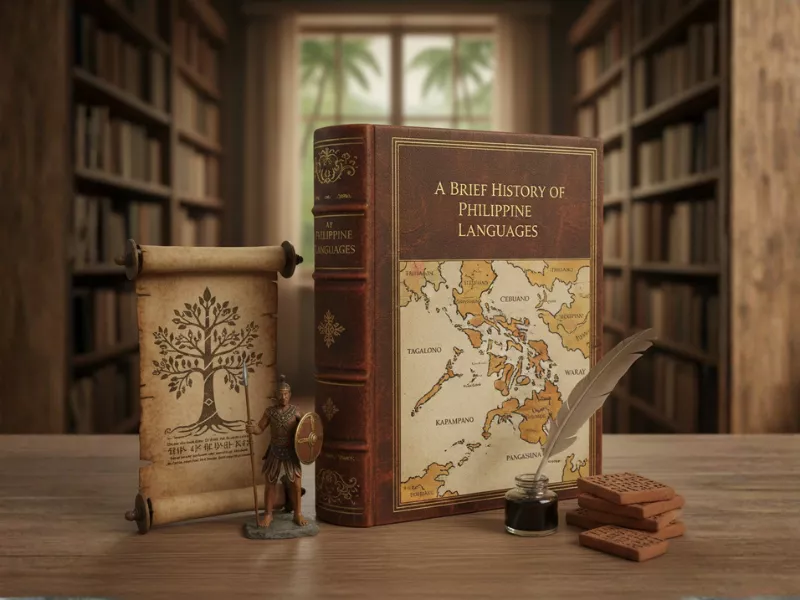
Many people wonder: what language do Filipinos speak? According to linguistic research, the Philippines has approximately 120 languages. The official language, Filipino, is a standardised variant of Tagalog used in formal education nationwide.
Timeline of Language Evolution:
- Until 1937, Tagalog served as the official native language
- 1959: Tagalog was renamed “Pilipino”
- 1970s: Pilipino underwent further development, integrating vocabulary from multiple languages
- 1987: Filipino was officially designated as the national language, with an updated alphabet including Western letters
This evolution addressed concerns from Cebuano speakers and other linguistic groups who disputed Tagalog’s exclusive status. The transformation created a more inclusive national language that better represented the Philippines’ linguistic diversity. Understanding this history is crucial when comparing Tagalog vs Filipino.
Curious about language diversity? Explore the Top 5 Facts About The Official Language Of Australia.
Key Differences Between Tagalog and Filipino
While closely related, Tagalog vs Filipino shows distinct characteristics. Understanding the Filipino vs Tagalog language differences helps clarify their unique identities.
Origin
Tagalog: Indigenous language of the Taga-ilog ethnic group residing near the Pasig River.
Filipino: A language developed from Tagalog that has adopted terms from Spanish, English, Chinese, and other languages. Many people now speak the Filipino language on a wider scale.
Age
Tagalog: Spoken for over a millennium in the Philippines, with origins traced back more than 1,000 years.
Filipino: Used for approximately 50 years. Officially designated as the national language in 1987, with an expanded alphabet incorporating Western letters.
Alphabets
| Language | Number of Letters | Additional Letters |
| Tagalog | 20 letters | Original set only |
| Filipino | 28 letters | Includes c, f, j, x, z from other languages |
Note: The Tagalog vs Filipino alphabet comparison shows Tagalog traditionally lacks certain consonants like ‘ñ’, which only appear in borrowed words. Filipino’s expanded alphabet allows for better representation of foreign terms.
Structure
Tagalog:
- Substantially larger technical vocabulary
- More rigid grammatical rules
- Stricter sentence structure
- A greater number of specialised terminologies
Filipino:
- Simpler, more accessible language structure
- Easier to learn and construct sentences
- More forgiving with fewer strict regulations
- Broader acceptance of borrowed terms
Language of the Nation
Tagalog: Became an official language in 1897, but faced challenges due to certain terms deemed “aesthetically unpleasing” and disputes from Cebuano speakers.
Filipino: Developed as an improved, more aesthetically appealing variant of Tagalog. Officially designated as the national language in 1987.
Sociolects
Tagalog: Features numerous sociolects (social dialects used by particular socioeconomic classes).
Filipino: Has fewer prominent sociolects in society, reflecting its role as a standardised national language.
Tagalog vs Filipino in Practice
Understanding how Tagalog vs Filipino differ in real-world usage helps clarify their distinction.
Vocabulary Examples
English Word: “Driver”
- Tagalog: drayber (phonetic transliteration, learn What is Transliteration)
- Filipino: drayber or driver (both acceptable)
English Word: “Computer”
- Tagalog: kompyuter
- Filipino: kompyuter or computer
English Word: “Dictionary”
- Tagalog: diksyunaryo
- Filipino: diksyunaryio (from Spanish “Diccionario”)
Sentence Construction
Simple Greeting:
- Tagalog: “Kumusta ka?” (How are you?)
- Filipino: “Kumusta ka?” (identical in this case)
Introducing Technology:
- Tagalog: Uses adapted phonetic spelling for foreign tech terms
- Filipino: More flexible, accepts original spelling with Filipino pronunciation
Written Communication
Formal Documents:
- Tagalog: Stricter adherence to traditional vocabulary and structure
- Filipino: Allows more flexibility with loanwords and modern terminology
Social Media & Casual Writing:
- Both languages: Often mixed with English in what’s called “Taglish.”
- Filipino: More commonly used in official digital communications
Educational Context
School Curriculum:
- Filipino serves as the medium of instruction in Philippine schools
- Tagalog is studied as a foundational component of Filipino
Language Textbooks:
- Filipino language textbooks include a broader vocabulary from multiple Philippine languages
- Tagalog resources focus on traditional Tagalog vocabulary and grammar
Myths vs Facts about Tagalog and Filipino

Myth 1: Tagalog and Filipino are the same language
Fact: While Filipino is based on Tagalog, it incorporates vocabulary, letters, and sounds from other languages. Filipino has 28 letters compared to Tagalog’s 20, and includes terms from English, Spanish, Chinese, and other languages.
Myth 2: Speaking Tagalog means you can’t speak Filipino
Fact: Tagalog speakers can understand and communicate in Filipino because of their shared foundation. The languages are mutually intelligible, though Filipino has a broader vocabulary.
Myth 3: Filipino replaced Tagalog completely
Fact: Tagalog still exists as a distinct language spoken by millions. Filipino serves as the standardised national language, but Tagalog continues to thrive, especially in traditional communities and literary works.
Myth 4: All Filipinos speak Tagalog or Filipino fluently
Fact: The Philippines has over 120 languages. While many Filipinos understand Filipino, regional languages like Cebuano, Ilocano, and Hiligaynon are primary languages in their respective areas.
Myth 5: You need to learn both Tagalog and Filipino separately
Fact: Learning one provides a strong foundation for understanding the other. Most language courses teach Filipino, which includes essential Tagalog vocabulary and grammar.
The Influences of Other Languages on Filipino
Filipino, sometimes called Philipino, is a language formed from Tagalog and numerous other languages. The extensive incorporation of terms from English and Spanish, along with the use of “Western” letters like j, c, x, z, and f, distinguishes Filipino from its Tagalog roots.
Spanish Influence
Before immigrants from Spain and the Americas arrived, sounds represented by certain letters were not natural to the Philippine islands’ natives. However, these sounds quickly became integrated into the Filipino alphabet.
Examples of Spanish-derived Terms:
- Diksyunaryio (from “Diccionario” – dictionary)
- Kuwarto (from “cuarto” – room)
- Mesa (table)
- Bintana (from “ventana” – window)
English Influence
Modern English terms have been extensively introduced into Filipino, especially in technology, business, and education.
Contemporary Examples:
- Computer → kompyuter
- Internet → internet (used as-is)
- Meeting → miting
- Manager → manaher
Other Language Influences
Filipino also incorporates words from:
- Chinese: pansit (noodles), siopao (steamed bun)
- Arabic: salamat (thank you)
Sanskrit: budhi (conscience), guru (teacher)
Conclusion
Filipino remains a developing language, continuously receptive to terms from other languages. The fundamental distinction between these two popular languages is that Tagalog is an older language used to create the new and improved Filipino. The updated language incorporates borrowed words and unique alphabets, making it more versatile for modern communication. People who speak Tagalog can comprehend Filipino and vice versa, making communication seamless between speakers of both languages. Given the global following and influence of both Tagalog and Filipino, professional translation services are essential for accurate communication.
Frequently Asked Questions
Can Filipinos understand Tagalog?
Most Filipinos understand and speak Tagalog, as studies show more than 50 million people in the Philippines speak the language. It is one of the official languages and the second most spoken language across the country.
Is it better to learn Tagalog or Filipino?
If you plan to work or conduct business in the Philippines, learning Tagalog opens doors to opportunities abroad. Tagalog is also spoken in America, Canada, Macao, Britain, Guam, the United Arab Emirates, and other countries. Most learners choose Tagalog because of its wider international application, though Filipino is more standardised for official purposes.
Can people who speak Tagalog understand Filipino?
Yes, Tagalog is closely connected to Filipino and many other Philippine languages, including Kapampangan, Ilocano, Pangasinan, Visayan languages, and Bikol languages. Both share numerous common lexical items and similar grammatical structures. Learning Tagalog helps you understand and learn Filipino easily.
Which language should I use for official documents in the Philippines?
Filipino is the standardised language for official government documents, educational materials, and formal communications. However, many documents are also prepared in English, which serves as a co-official language.
Are there dialects within Tagalog and Filipino?
Yes, Tagalog has regional variations, particularly between Manila Tagalog and Batangas Tagalog. Filipino, as a standardised language, aims to minimise dialectal differences, though regional pronunciation and vocabulary variations still exist.
How long does it take to learn Tagalog or Filipino?
For English speakers, achieving conversational proficiency typically takes 6-12 months of consistent study. Fluency may require 2-3 years of immersion and practice, depending on learning intensity and opportunities for practical application.
Are Your Translators Certified?
Yes! We have over 500 NAATI certified translators in our network.
How long does it take to get Tagalog documents translated?
For standard Tagalog vs Filipino document translation, the typical turnaround time is 2-3 business days. However, if you need urgent translation services, you can select expedited options and receive your translated documents in as little as 6 hours, depending on document length and complexity.
How much does Tagalog to English translation cost in Australia?
Translation costs for Tagalog vs Filipino documents start from AUD 60 for standard documents. The final price depends on several factors, including document complexity, language pair (Tagalog to English or Filipino to English), translation type (standard or NAATI certified), urgency, and volume of work. For an accurate quote, you can submit your document online and receive a free estimate within 10 minutes.
You May Also Be Interested to Know

- What Is Transliteration? Uses, Importance, Challenges, and Examples - January 22, 2026
- How to Say Thank You in Thai in 2026: Common Ways and How to Respond - January 8, 2026
- CALD Meaning And Significance To The Australian People - January 1, 2026